
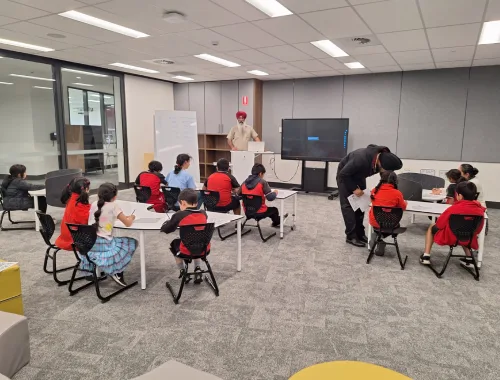
What Great After-School/Weekend Learning Looks Like
What Great After-School/Weekend Learning Looks Like
A great after-school/weekend learning program should give children more than a place to spend a few hours. It should give families confidence that their child is learning in a structured, safe, and well-supported environment that genuinely adds value to the week. (ACT Government)
Why Parents Are Looking More Closely
In Canberra, this matters for a reason. The ACT Government says nearly 1 in 4 Canberrans speak a language other than English at home, and its Community Language School Program supports more than 2,000 students learning language and culture across the city. That means parents are not choosing in a vacuum. They are comparing real options in an active local sector and trying to work out which programs are organised, trustworthy, and worth the commitment. (ACT Government)
For families in Canberra, Queanbeyan, and Googong, the right choice is rarely the program with the biggest promises. It is usually the one that shows clear standards in how it teaches, communicates, and cares for children. When parents know what to look for, they make better decisions and avoid wasting time on programs that sound good on paper but feel inconsistent in practice.
A Suitable Venue Matters More Than Many Families Realise
One sign of a well-run program is that the learning environment feels practical, organised, and appropriate for children. That does not mean the provider must own a campus. In the ACT, public school facilities can be hired when they are not being used by the school, and the ACT’s policy specifically supports community use of school facilities outside school hours. The ACT Government also notes that school spaces available for hire can include meeting rooms, outdoor areas, sporting facilities, and performing arts theatres, with fees usually set by the school principal. (ACT Government)
That is useful for parents to understand because many legitimate community-based programs operate from hired venues rather than permanent private premises. A program using an existing school or community facility is not automatically better or worse. What matters is whether the venue is suitable, easy to access, and used in a way that feels organised and respectful.
Parents should notice simple things. Is the classroom space appropriate for the age group? Is drop-off and pick-up manageable? Is there a clear routine? Are basic facilities such as washrooms and parking practical for families? Strong programs make the most of the space they use and keep the experience easy for parents as well as students.
Child Safety Should Be Clear, Not Vague
If a program works with children, parents should not feel awkward asking how safety is handled. In the ACT, the Working With Vulnerable People scheme is designed to reduce the risk of harm or neglect by checking, registering, and monitoring people who work or volunteer with vulnerable people. Access Canberra says that if a person will have regular contact with vulnerable people while working or volunteering in a regulated activity, they must have a WWVP registration, and regulated activities include child education services as well as coaching, tuition, and certain religious or club-based activities involving children. (Access Canberra)
This does not mean parents need to become compliance experts. It does mean a quality provider should be ready to explain its child-safety approach clearly. Families should be able to ask sensible questions such as who supervises classes, how attendance is managed, what happens at drop-off and pick-up, and whether relevant staff or volunteers hold the registrations required for their role. A trustworthy program will answer calmly and directly.
Teaching Consistency Matters More Than Fancy Claims
A good program does not need dramatic promises. It needs consistency.
The ACT’s language education planning recognises that language education should be valued and that consistency in language programs matters. At the same time, an ACT review of community language schools found that quality can vary across the sector and that professional development opportunities may be limited for some teachers. That is exactly why parents should look past broad marketing language and focus on how learning is actually delivered week after week. (ACT Government)
When you choose a after-school/weekend learning program Canberra families can rely on, consistency usually shows up in familiar ways. Lessons are age-appropriate. Children know what they are working on. There is a balance between revision, new learning, and participation. Teachers or tutors do not just “fill the time.” They guide it.
Parents do not need to see a complicated teaching framework to recognise quality. They only need to notice whether the program feels prepared, steady, and purposeful.
Communication With Parents Should Feel Easy
Many after-school/weekend programs lose trust not because the teaching is poor, but because the communication is unclear. Families should not have to chase basic information about timing, expectations, fees, materials, or term structure.
The strongest programs make it easy for parents to understand what their child is learning and how the routine works. That includes practical updates, realistic expectations, and a straightforward contact pathway when parents need help. Clear communication is often one of the clearest signs that a provider respects families’ time.
This matters even more in community-based settings where parents may already be juggling weekday school, homework, travel, sports, and family responsibilities. A program that communicates well reduces stress before it ever starts improving learning outcomes.
The Best Programs Match Support to the Child’s Stage
A Year 1 student and a Year 12 student should never be treated as though they need the same teaching style. A strong after-school/weekend program recognises that younger children often need more movement, repetition, and confidence-building, while older students need structure, relevance, and learning that respects their maturity.
The ACT Education Directorate says it wants students to feel safe, valued, and supported to thrive, and that is a useful benchmark for parents as well. Quality is not just about what is taught. It is about whether children feel supported at their age and level. (ACT Government)
That is especially important in programs serving broad age ranges. Parents should look for signs that the learning is adapted, not simply delivered the same way to everyone in the room.
Culture Should Be Meaningful, Not Just Decorative
In Canberra, language and culture often go hand in hand. The ACT’s own community language and language education material reflects the importance of language, culture, and community connection, and highlights the broader role the community language sector plays in a multicultural city. (ACT Government)
That means a quality program should not treat culture as a token add-on. It should make children feel that what they are learning has meaning in real life. That might show up through stories, respectful cultural learning, performances, celebrations, or stronger confidence in family communication. The goal is not to overload children with extras. The goal is to help them feel connected to what they are learning and why it matters.
Questions Worth Asking Before You Enrol
Before committing, parents should be comfortable asking a few practical questions:
How is the program structured across the term?
How are different age groups supported?
What is the approach to child safety and supervision?
How is progress encouraged?
How are parents kept informed?
What makes the venue work well for children and families?
Good providers do not get defensive when families ask thoughtful questions. They welcome them. That usually tells you a lot about the kind of experience your child is likely to have.
Choosing With Confidence
Great After-School/Weekend Learning is not about hype. It is about safe systems, steady teaching, suitable venues, and a learning experience that respects both children and parents. In a city like Canberra, where community language and educational support programs already play an important role, families are right to look for substance before they enrol. (ACT Government)
If you are comparing options for your child and want to learn more about a structured Canberra initiative supported by Sarkar-E-Khalsa International Incorporated, get in touch to explore whether the supported language school initiative is the right fit for your family.
